9 APR 2025 REVIEW
Clothing as a Medium for Dialogue and Disruption
I first encountered Yoshinari Nishio in 2012 at Wajukuu Art Project, where he led the Kufu:ku initiative, an inventive collaboration that invited Nairobi-based tailors to create “abnormal clothes” based on children’s imaginative sketches. Embracing intentionally unconventional sewing techniques, Wajukuu artists brought these youthful visions to life, transforming them into playful and thought-provoking fashion pieces. Nishio, a fashion designer, artist, and Associate Professor at Tokyo University of the Arts, currently lives and works in Tokyo.
This year, Nishio brings his ongoing global project Self Select to Munyu Space in Westlands, Nairobi. Initiated in 2007, the project involves the artist exchanging clothes with strangers on the street, asking them in their native language. To date, Self Select has unfolded in cities such as Paris, Cotonou, Auckland, and Nairobi, with 117 participants having taken part in this intimate and unconventional exchange.
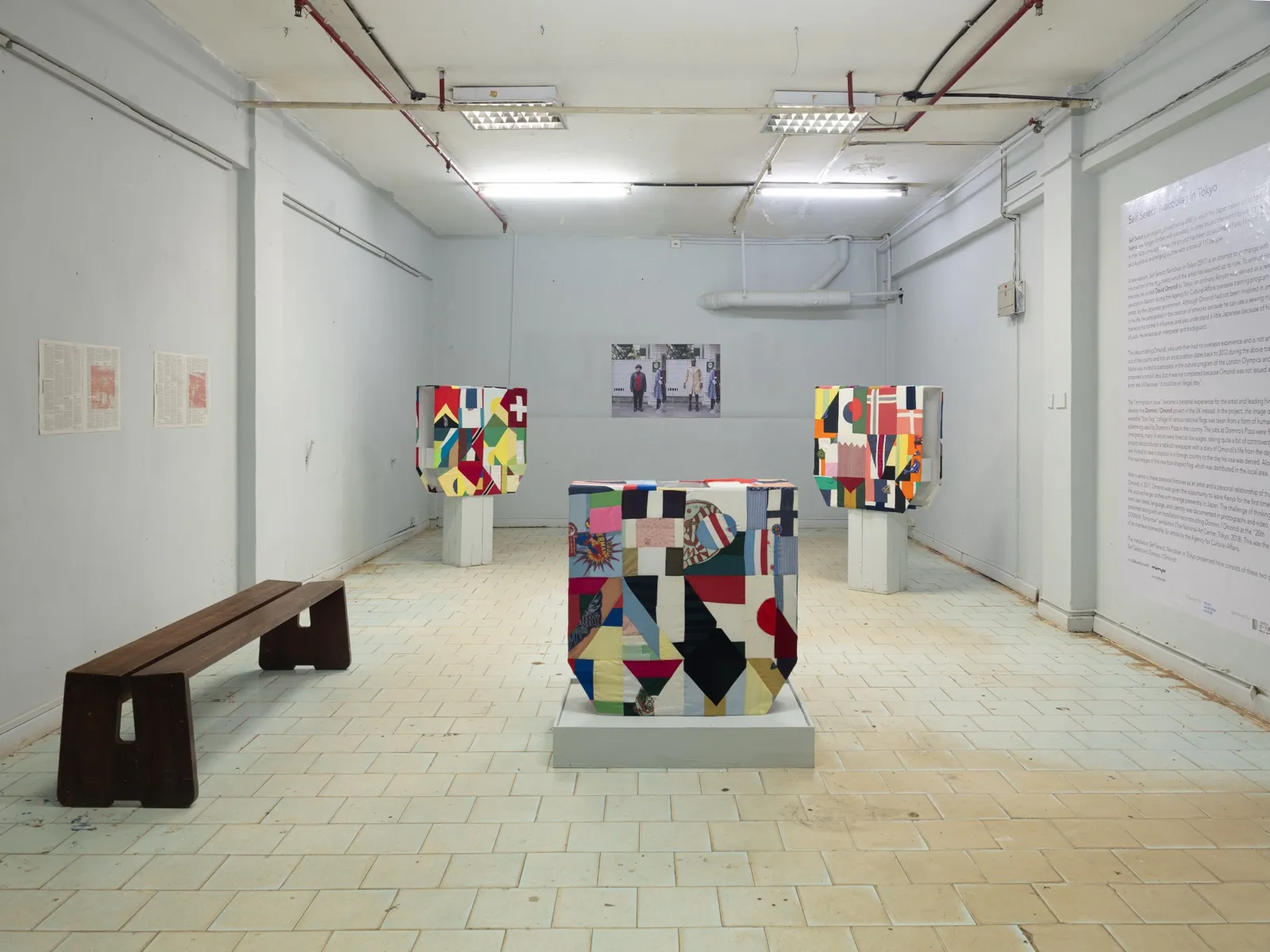
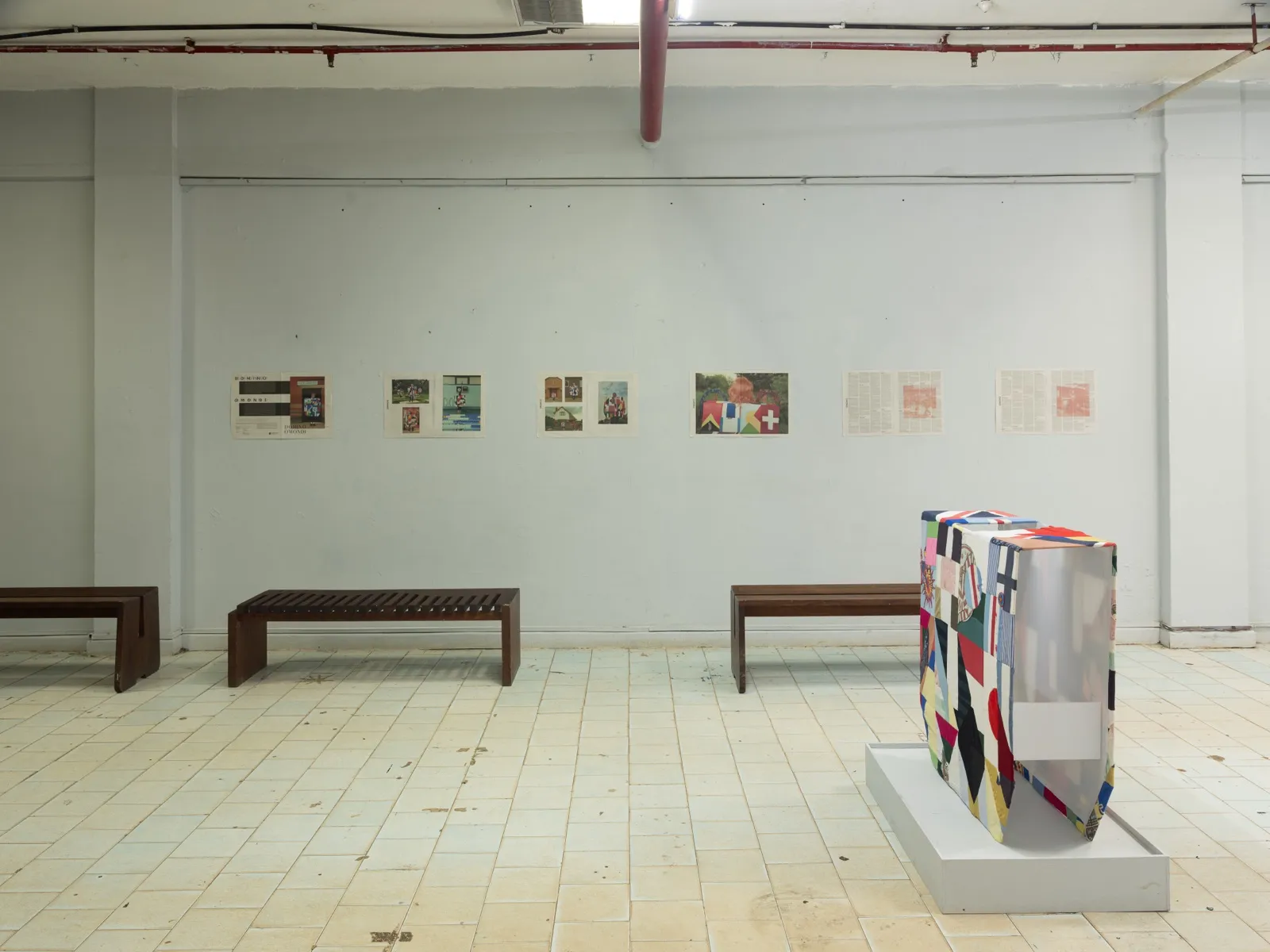
The exhibition opens with Domino / Omondi, a striking installation composed of three garment-like sculptures pieced together from various national flags. These hybrid forms evoke urgent conversations around migration, national identity, and shifting borders especially poignant against the backdrop of rising far-right nationalism in the West and the tightening of immigration policies.
Beyond its visual symbolism, the work critiques the often-ignored labor of immigrants, whose presence sustains many economies but is frequently met with hostility or marginalization. The inspiration behind this piece emerged in the UK, where Nishio drew a parallel between immigrant workers and the use of wearable advertising specifically the “box flags” worn by Domino’s Pizza delivery staff, many of whom are migrants working under precarious conditions.
An accompanying tabloid-style publication adds another layer to the narrative, telling the real-life story of Omondi, a Kenyan invited to work abroad, only to have his visa rejected. His experience echoes the frustrations many face when navigating global immigration systems. Having personally faced a UK visa denial based on presumptions that I wouldn’t return to Kenya, I found Omondi’s outrage at being barred entry to a country whose citizens are welcomed into Kenya visa-free profoundly resonant. His story highlights the racial and systemic inequities woven into the fabric of international migration policy.
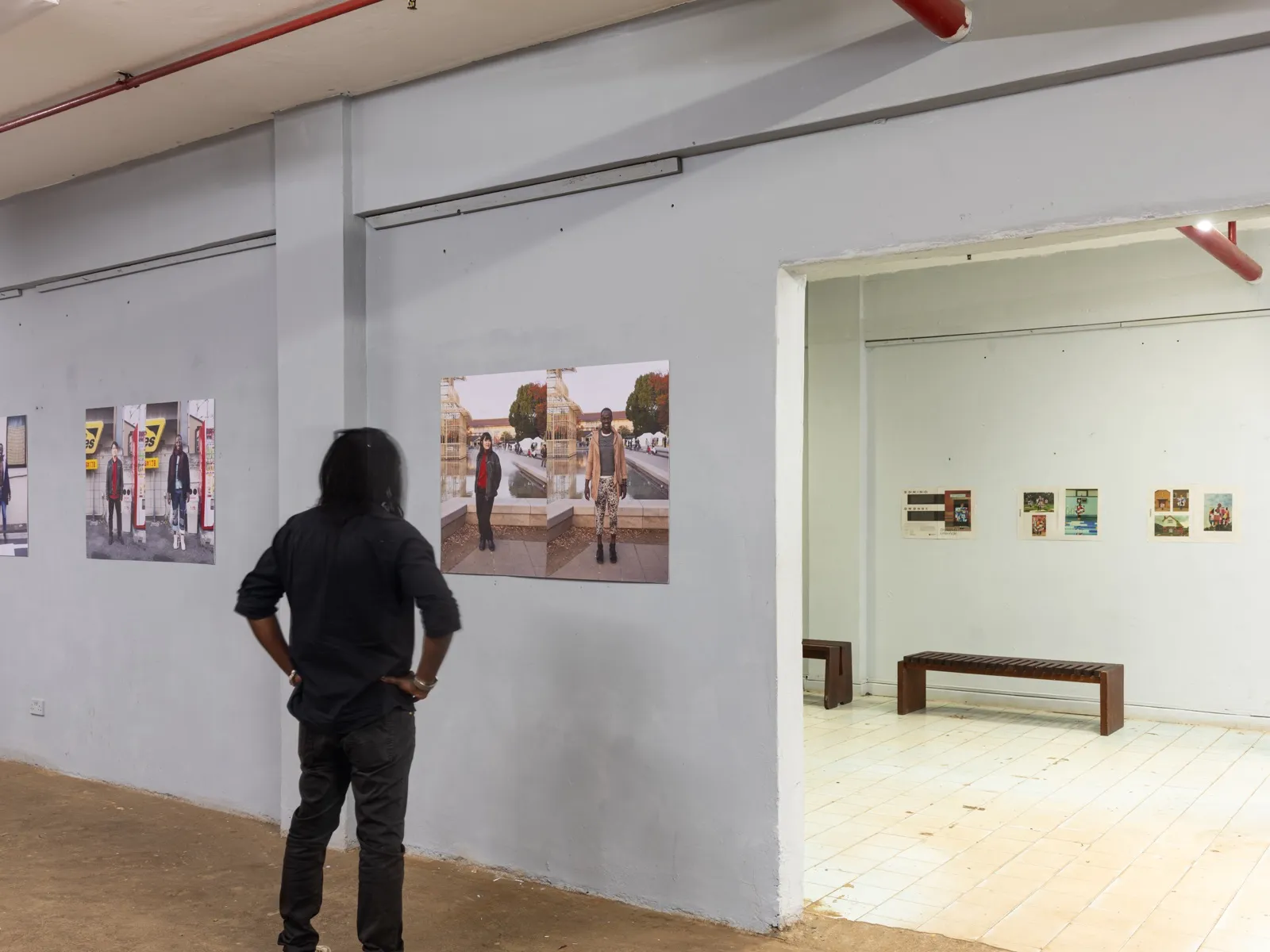
In the next room, the exhibition continues with Self-Select: Nairobian in Tokyo (2017), a participatory piece composed of 14 photographs documenting Omondi’s trip to Tokyo. In this iteration, Nishio passes on the role of “negotiator” to Omondi, who engages with strangers in Japan, asking them to trade clothes. The resulting interactions captured through photographs and video are rich with cultural symbolism and vulnerability, revealing brief but powerful moments of connection. Through these simple exchanges, ideas of identity, otherness, and self-presentation are questioned, softened, and reshaped.
During the artist talk, Omondi shared that he avoided approaching police officers and men in suits explaining simply, “Police are the same everywhere.” His comment struck a chord, reminding me of poet Henry Stewart’s biting critique of authority figures in suits:
No woman in a burqa (or a hijab or a burkini) has ever done me any harm. But I was sacked (without explanation) by a man in a suit. Men in suits missold me pensions and endowments, costing me thousands of pounds… If we are to start telling people what to wear, maybe we should ban suits.
The quote echoes the central message of Self Select: a challenge to the symbols of power, privilege, and systemic control, and a celebration of the quiet, transformative power of everyday encounters. In his artist statement, Nishio writes:
In modern civil society, clothing provides us with a sense of security and confidence, and functions as a medium that facilitates communication. To be accepted as a legitimate member of society, one must understand cultural norms related to the body. In this way, clothing becomes both a tool for self-expression and a form of social negotiation.
Through Self Select, Nishio pushes us to reconsider clothing not just as fashion, but as dialogue a living language that bridges strangers, cultures, and continents. His work invites us to ask: what do we wear to be seen, to belong, to resist, and to connect?